Tag Archives: Gifted

Quiet

I have been quiet, a friend noted on one of my socials, and they said they hadn’t seen much of me in their feed in a while; they missed me. They weren’t wrong. I said I’d been quiet, not elaborating on why; I missed them too.

I have been quiet. I have spent a long time, many months, in introspection trying to figure out who I am again. Find my voice.

There’s a huge learning curve to beginning again. Everything you thought you knew goes out the window, and the skills you learn by doing take a long time to become second nature while you second-guess every move you make, every word you say, every step you take.

I’ve been afraid to say much the last several months, if I’m honest. The vagueness with which I’ve typically written was purposeful, in part because specifics didn’t matter–giftedness and the issues that go along with it aren’t specific to the people I serve or even the experiences that I have as a gifted adult. Many gifted people have similar enough experiences that it resonates regardless.

My life over the last nearly twenty years has revolved around my work in the gifted education space. I set that part of myself aside for a bit in order to address the lack of knowledge I felt I had as a school leader. When I went home at night, I replayed the day, much as I imagine a coach does after a game, looking at every play for where things went wrong and opportunities that were missed–where had I missed a signal, a subtle movement that would have alerted me to what was to come next. Some stood out like bright pink doors in a sea of earth-toned HOA-controlled homes. Others were sleight-of-hand movements, coins disappearing between knuckles while flutters of fingers distract the eye.

Negativity bias is easy–it’s so easy to see the things that go wrong, especially after the fact. And it’s easy to hear the complaints–they’re loud and the cacophony is impossible to ignore. After a while, they blend together, a common chorus of words from ghosts from the past insinuating that I’m in water above my head.

The water has been exactly at my head. And it recedes like the tide after a while.

And so I have been quiet. The fear of judgment is greater than the need to be heard or ask for help sometimes.

And there is fear, not only that I will be judged or targeted. And that using my voice will impact the kids, families, and other people I serve adversely.

The voice of my father about “those damn rabble-rousers” getting what they deserve is loud. They were seeking social change that would allow equality where it hadn’t existed before and he struggled with that…he knew it was needed, agreed it should happen, but wanted it to be less…loud and forced. He taught me to stay quiet… Quiet lets you keep your job, your home, your family. Quiet fixes it so no one knows who you are.

But I can’t stay quiet.

We were gifted a five-day weekend by the Universe the day after the election. I wasn’t mad about it. I had a lot to process and more to figure out about how to best support the people I serve and handle what I knew would be coming. Regardless of which direction the election had gone, there was going to be fallout. There were glimpses of what it might look like over the last several years, and some had been directed at me by people who don’t know me…we’ve never met beyond the walls of where I work and some have never met me at all.

But I can’t stay quiet. Everything I do and say as a school leader is scrutinized, from what topics came up in the course of a lesson on optics to why the hand-holds on the climbing wall are the colors they are to what company makes the crayons students are provided and who the parent company of that company is and how it’s connected to a tiny country somewhere in the far reaches of the ocean someone doesn’t like because they don’t agree with something the leader did or said ten years ago… But I have concerns…and they impact my school life very much.

I have concerns about how things will play out. I worry about what will happen with gifted education over the course of the next four years and beyond–the impacts of this election to all of education are concerning. “It’ll be wonderful, wait and see!” isn’t something that I am comfortable doing. Someone today told me I should “educate myself.” I did a fair bit of that before I voted, thanks…and that’s exactly why I’m worried.

I’m concerned that teachers just starting out or thinking about it will leave… The changes proposed by some local governments about what is allowed to be taught in schools eliminates important information and skills that teachers know is accurate and necessary that kids should know before they go off into the world. And changes to higher education may complicate the path to going to school to be a teacher even more.

I worry that likely changes to education funding will eliminate teaching positions and even whole departments designed to support populations of students in need of specialized instruction and the students they’re designed to serve will suffer. Training for teachers is needed, and it’s not free. Support for kids takes people…and they aren’t free either.

I worry most about our kids–gifted kids see and experience the world differently, and I’m concerned that those differences will be forced underground by those who demand blind compliance. Thinking outside the box, advocating for their needs and the needs of others, seeking justice…all things we’ve worked so hard to teach them are important parts of who they are and are valuable skills…might be lost. Is some of this thinking catastrophic? Maybe… but I’ve already lived with the “everyone must be doing the same thing at the same time” and “there’s no room for differentiation up” kind of required teaching. The damage that does is catastrophic to kids (and adults) who need the space to scratch both sides of their brains…

Knowing what I can and cannot say, what topics are verboten and which are allowed in this role, even in my own personal spaces is difficult…once something is out in the world, it’s out there. Education in our country is impacted by politics, like it or not.

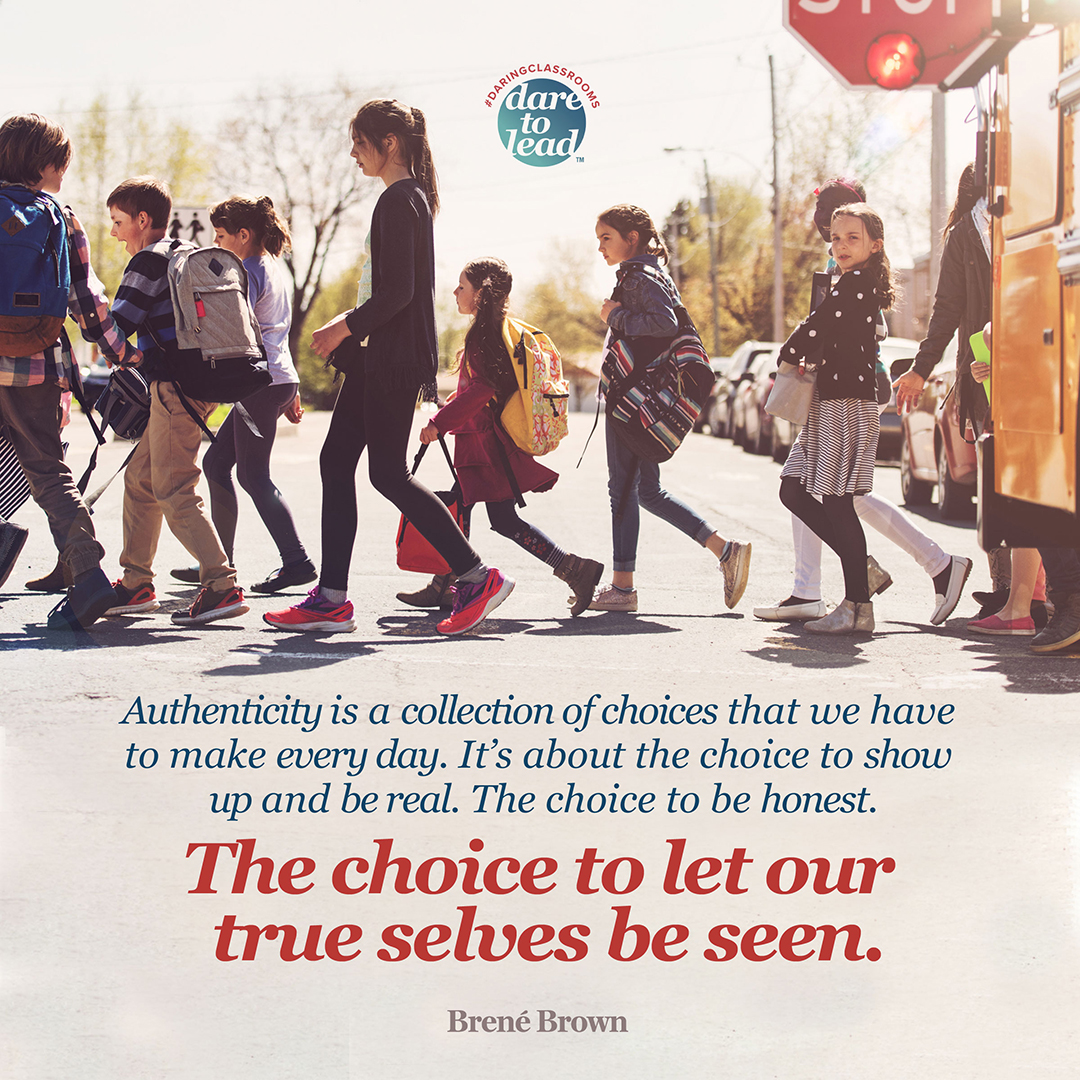
To live an authentic life is to take risks and live with integrity… I can’t do that if I’m quiet.

Inevitable

Change is inevitable, or so I hear, and so tonight I reflect on just that.

When I became a teacher, it was a long time coming…almost 10 years had passed since I should have started this journey. Had I done it the traditional way, I’d have been in the classroom by 1998, which would put me at 25 years right now. I wasn’t altogether traditional in my path, and so here I am in my 16th year. A milestone in itself.

When I began this journey, I planned to teach high school English. Except high schoolers are not my people, save those who were my people before they got to high school. High school as a whole, I’ve discovered, is not my thing, and I have such philosophical angst around much of the way high school is done that I wouldn’t have lasted long. Being anything but a teacher was not in my long-term plan either. I was always going to be in the classroom, hopefully aging like Katherine Hepburn and looking just as stylish.

The journey into the land of Tall Poppies was an interesting one. As I learned the things about teaching that aren’t even remotely taught in teacher school, there were things I found that I couldn’t abide. Cookie-cutter classrooms and lesson plans, little to no movement, and the overuse of the word “fidelity.” But I managed to find my people, my heart aching to do the things they talked about in steering committee meetings, and stalked them until they agreed to give me a chance with these gifted kids. And it was glorious. And incredibly difficult. And worth every moment of internal…and external angst. Kids-who-will-always-be-mine are going to college, getting apartments, finding partners, and growing their own families. Yes, it was glorious and I look back on my time with each of them, even the ones who gave me heartburn daily, with such fondness. My heart is bigger because of them, and they each managed to make me a pretty damn good teacher.

I don’t know quite when I changed my mind and created a fork in my plan. I remember thinking that I wanted to do more, having a greater impact than just within my little classroom with yellow walls. I took a chance and presented at a literacy conference, because no one was talking about gifted. Everything was about intervention for when kids were behind, or practical strategies for working with kids who were not behind and not ahead, but squarely where the standards and assessments said they ought to be.

But no one talked about gifted. No one talked about what to do when the kids are reading several grade levels beyond what the grade level says they should and initiating complex questions for discussion. No one talked about what to do when an eight-year-old is writing their own chapter books or informational essays complete with domain-specific vocabulary, scaled diagrams, charts, and data analysis. No one talked about how to handle the intensity of absolutely everything. So I did.

(I didn’t know then that there are whole conferences dedicated to just gifted and all the fantastic things that go along with it. And those are utterly amazing…full of people who get “it” and want to help others understand how important it is for gifted kids to be SEEN.)

After that first conference, I presented sessions at more conferences and sought to learn more from people who are far smarter than I am.

Gradually, I grew to create my own position, marrying the things I did well with the things I wanted to do more of. And it was good, most of the time. And when it wasn’t, I felt it in the depths of my soul and tried to do better the next day.

My friend, who has also been my boss for most of my career, wanted to do more too. The fork in her plan has had a very long on-ramp, but it’s been worth it to prepare her for what comes next. Change is inevitable, you see. And so, while she gets to learn and do more doing something different, I get to take everything she taught me and do more too.

I get to fight the good fight for our Tall Poppies, leading and advocating on a greater scale and in a slightly different capacity. This was not the fork I planned at all, but it’s a logical one. The work my friend and colleagues have done over the past decade has enabled me to grow into leadership work.

A wise and very loud man said that school leaders should want to grow their people out of their jobs. Not because they want to lose them, but because without that growth, and growth from within, the school doesn’t evolve and have a greater impact on the kids it’s designed to serve. It’s not that a school needs to transform into something else altogether, but continued development of the staff creates an environment where best practice is the norm…it evolves over time. And sometimes, best practice means that someone should go off and do work that’s beyond the walls where they began. I want people to look back on their career in education and be able to say that they kept learning, growing, and becoming better at serving kids, in whatever capacity that might be over time.

I want the same for me too. I’m strangely quite happy that teaching doesn’t have to be a one-track career anymore, moving from classroom to administration to central office to retirement. From any point, one can choose to take what they’ve learned and serve in another role and to impact the lives of kids in a different way…because they were encouraged to develop their capacity by those who saw the potential for something beyond.

There are some things that are always true about change. It’s inevitable. It tends to generate additional change. It can be either positive or negative. But most importantly, it’s necessary for growth.

Wisley – Poppy and Butterfly by Colin Smith is licensed under CC-BY-SA 2.0

Walls and Boxes

A colleague of mine once said that it was critical for students to write to the same prompt, do the same project (a diorama for you! and you! and you!), take notes the same way to capture the same information, and turn in the same work with only one right response.

Doing so, they said, would teach them what it looks like when work is done, what it means to have work that is done well, and how to evaluate their own work against a set standard – the criteria set forth by a teacher. I saw an article about this somewhere the other day and it noted too that this type of expectation is setting kids up for the real world of adulthood–to be good little worker bees who are able to do what they are asked to do when they are old enough to have a job.

I went along with my colleague’s thinking for a while. I was a newish teacher and wasn’t sure how to prove my hypothesis about why my gut was aching more and more as we moved from unit to unit.

I wanted to see what would happen if we gave kids the opportunity to show what they had learned using a variety of options, each with its own set of criteria but also incorporating a requirement for the same knowledge. One of the things this colleague had noted was that they felt that it was impossible for a teacher to evaluate student learning if everyone was turning in something different–all students had to show the same learning so all students should be doing exactly the same work and then should be evaluated against each other to get a good picture of how the class as a whole was learning. A teacher can’t do that if everyone turns in something different–it all has to be exactly the same.

Almost everything I’ve learned about teaching, I’ve learned from kids. Kids have told me what they need in the past 17 years. And they’ve told other educators for far longer than that. They need, especially in the elementary years, to have opportunities to show what they know in a way that they are confident and able to do it. Some need to tell me what they know in a conversation or a presentation. Others want to sing about it because they can remember things best that way. Some want to draw it out and explain it. Others want to put all of it and then some into a poster and add bling and lights to illustrate the most important parts (the things THEY feel are the most important) and others want to write about it–they want to write about the experiences of people, their thoughts about a particular event, or simply lay out a series of facts. And still others want to recreate something they read about or saw–with a dance or a series of hand movements or by actually making the thing so they can understand how it works.

Kids need choice. They need to choose what they do, how they do it, and all the bits and pieces that go into it. And they need to learn what to do when what they chose doesn’t work out.

A question that came up was how I’ll know if they learned everything if they’re only focusing on something THEY want to share.

I don’t want them to learn everything. There’s a place for regurgitation of facts but I want them to learn enough to be able to connect what they’re learning with other things. They’re capable of finding out when William the Conqueror invaded England. They can google the names of every US president in order or learn the song if it brings them joy, but I’d rather they understand and be able to explain how the awful thing one person did impacted events and other people later on…and be able to connect it all to current and future situations.

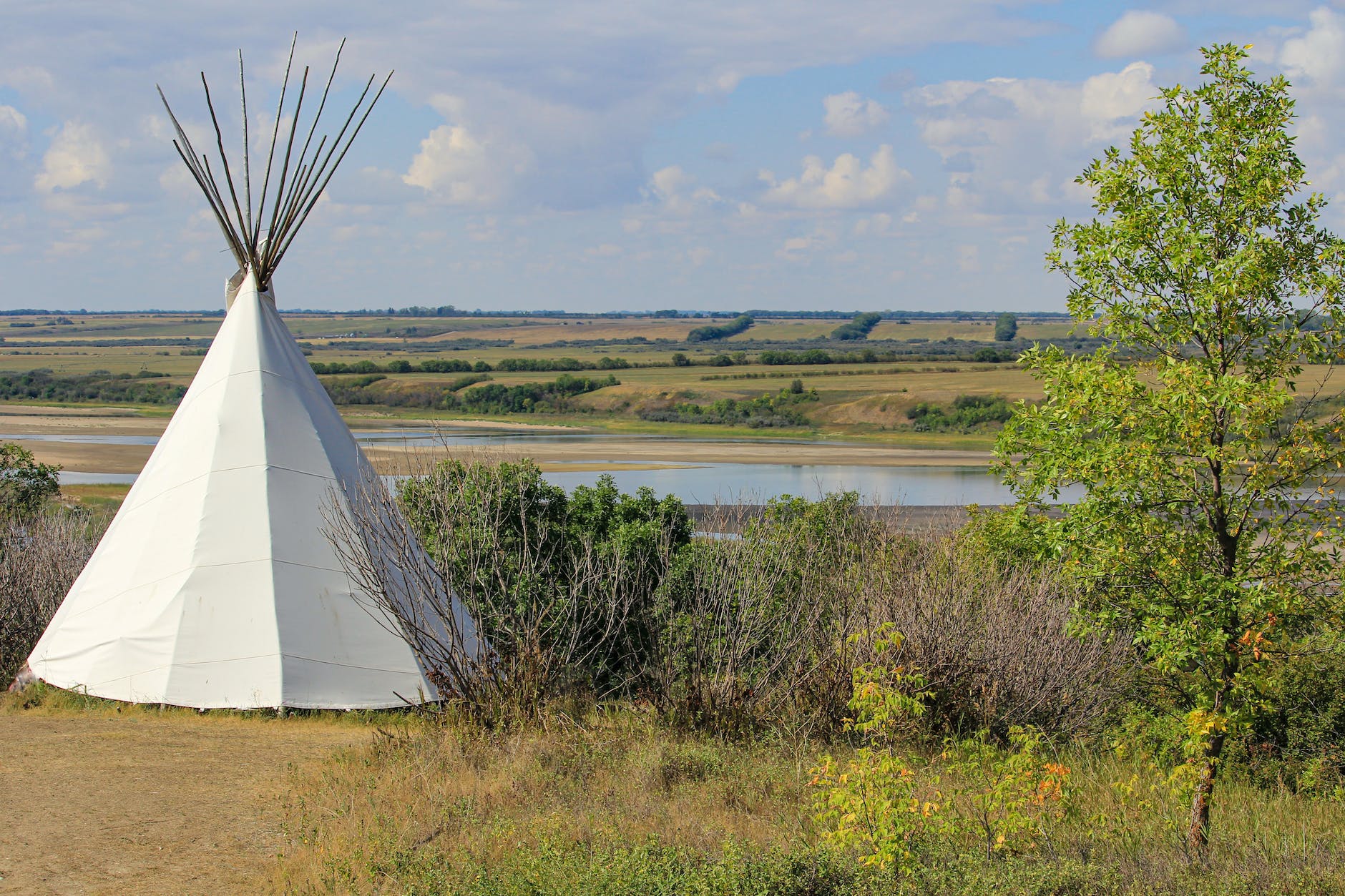
A million years ago, when I was little, we learned about Native American tribes in Mrs. Gerlach’s class. I remember using paper bags to make “leather” to create a tipi and writing stories using pictures on the sides using markers, and sugar cubes to create igloos, and learning a little bit about the ways Native Americans used everything in nature to live. It was fun, and I remember that I enjoyed it all very much.

Photo by Jola Kedra on Pexels.com

Here’s what I didn’t learn:

I didn’t learn why they settled where they did or why they didn’t choose to move when the weather was cold and awful or what we’d consider too hot.

I didn’t learn why the Trail of Tears happened or why Native Americans were moved from where they settled first by people who moved here to escape persecution in their home country. And I didn’t learn why people thought that was perfectly reasonable to do.

I didn’t learn how the Native American cultures were the same, or how they were different beyond where they might have lived or what they ate, and I didn’t learn anything about their individual cultures or how their cultural stories connect to stories in other cultures in and beyond the U.S.

And given that I went to a Catholic school, I didn’t learn how their beliefs about God were the same or different than the faith in which I was being brought up. I think that would have been pretty damn important given we were learning how to be good Catholics.

I did learn that my tipi needed to look the same as others right down to how my story looked in pictures and that my igloo had to be shaped just like the other ones. I learned to answer multiple choice questions and match vocabulary words to their definitions.

And now as a grown-up, I don’t remember anything about that content beyond how to make a damn fine piece of paper bag leather and the way that it felt in my hands when it was soft and pliable…and that sharpies work better to draw on it than Crayola markers.

Kids deserve to learn more than how to make paper bag leather tipis. They deserve to be able to explain why they thought it was important to focus on the fact that one Native American culture chose to stay on the Western Slope while others chose to park themselves on the plains. They deserve the opportunity to imagine a life a long time ago and connect to it, comparing the 25-room homes of one culture to the two-bedroom, one-bath house they live in. They deserve to see history, science, literature, and math not as a series of facts to be memorized and spit out when the test day comes but as experiences of real live people who made choices and decisions and had revelations that impact the lives of other real people.

They deserve to get to do the work that generates more “why” questions, more “how” questions, and more “what if” questions.

As educators, we need to look beyond the posters we bought on Amazon or from the teacher store hanging on the walls of our classroom and think beyond the boxes of curriculum that arrive on our tables in August. None of that is learning. Those are resources to help support it. And this is why Joe Schmoe off the street cannot be a teacher–a teacher…a good one…learns over time how to use those resources as something to supplement learning…not to drive it. There’s good stuff in it, to be sure–sometimes there are great questions or ideas that you can steal to make a springboard for kids into a great discussion or great exploration of thought that leads to more questions.

That is learning.

Progress/Perfection

A friend gave me a shirt that says Teaching is Progress not Perfection.

One of the kids noticed it today, pointed it out, and intentionally grinned and said, “I like that.”

I have felt like I am floundering for several weeks. I know I can wing it in the classroom, but I don’t like having to do so for more than a little while. I am able to build fairly good relationships with kids easily–street cred goes a long way and kids are inherently good-hearted and grant grace in buckets.

This morning, I got up before God after sleeping like the dead from pure exhaustion and the panic set in quickly after I took the dog out.

Getting up at 430 in the morning should be plenty of time.

It’s not.

The realization that I had eleventy-billion things to do, no copy paper, little sense of direction, a long list of to-dos sorted and arranged in my head, no time to do any of them, emails to catch up on, and also had to people far before I felt ready to caused a Jessie Spano moment. (No, I didn’t sing or scrunch my socks above my high-tops…but I did make damn sure I took my supplements and anxiety meds.)

I don’t like feeling that way. I prefer, as a friend puts it, to “not embrace frantic.” Teammates have been fabulous, preparing slide decks as a jumping off point with critical things included, granting grace for missed meetings, and allowing me to disappear to get other things done in the few moments available.

So tonight I sat and reworked slides for tomorrow in a way that brings me a little normalcy, rethinking how the last two days have gone, what I’ve missed teaching, what I’ve done well, and what I’ve forgotten entirely.

I’m thankful for the gift of past experience–my kids taught me well. And this new batch is helping me remember and get into a groove that suits them too.

We’re creating a system for our work together, I said this morning. We’re creating systems that work for us in this space together so that we can function and learn and grow. No, our brains aren’t doing a lot of heavy lifting just yet but they will…once the foundation of our systems are in place.

A tree needs roots to grow…but it’s progress…not perfection that helps it grow strong.

Dam

2022 has been one hell of a year.

Really, everything since March 13, 2020 has been one hell of a time.

That’s when the grieving began. It’s been compounding exponentially ever since.

We grieve time lost. When everything just stopped…suddenly home was safest so we stayed there as much as we could. We lost time with loved ones, time to grow and change, time to find out who we are.

We grieve people lost to a virus no one knew or understood how to control. And those lost once some understanding was attained too.

We grieved seeing full faces, smiles, smirks, and hearing people speak clearly, unmuffled by layers of cotton and medical grade material. We still grieve missed milestones like kid-faces becoming young adult faces, schmutz appearing between noses and lips, grown-up teeth arriving, baby teeth lost, and braces coming and going. And we grieve missed facial expressions that would have conveyed what we really meant…not misinterpretations.

We grieve being able to do our jobs the way we knew how to do them–the way we’d always done them. The routines we had perfected…the systems that worked. Some of us were just coming into our own as educators; we had some stuff figured out and had plans for how to make other stuff better.

We grieve friendships fractured or ended altogether because of different beliefs, different politics, and different ways of wanting to see a crisis handled. We grieve family relationships that will be forever changed by words and actions over the past several years…

My heart is heavy (yes, again) because so much of the last several months (read: years) is hitting me like hail on a roof that desperately needs replacing with every question about what the plans are for this year.

There’s a teacher availability crisis if you hadn’t heard. More are leaving the profession than entering. All of the reasons are valid ones. Family needs change. Professional goals change. Pandemic stress won. Feeling unappreciated, overworked, and disrespected by people inside and outside of education is real. Seems every other article I read lately is either criticism of those who choose to stay to do this Big Work or criticism of those choosing to do something different. Either way, the article, opinion piece, or podcast is almost always about how educators failed the kids, the parents, and society as a whole because reasons and how administrators at every level failed everyone altogether. It takes a toll and makes you doubt what you believed you were called to do.

We’re short teachers this year, and it’s likely that both me and my director will be teaching in addition to doing our actual jobs with support from an army of brilliant humans who are willing to jump in and take over parts of our brains until the right people arrive. And I’m grieving my office-with-a-window job too. I had plans… It’s no one’s fault, of course. I’m not angry…just sad. Cloning is still not an option, unfortunately–though I hear they’re getting closer. Probably won’t be done and foolproof soon enough to be useful.

I have said I miss teaching. I do miss teaching. I miss kids and creating a learning community together. I miss learning alongside them and heading down rabbit holes because we can. I miss ah-ha moments and their increased confidence showing through when they help someone else with something that was hard for them a few weeks ago. I miss the moments shared among us, the goofy jokes, the trust built over time, growing their self-advocacy skills, and the street cred provided for me by older siblings. I am looking forward to the team-level collaboration, the ideas crafted together, and learning alongside kids, colleagues, and families though–that’s a piece of “teacher” life that looks very different in my office-with-a-window job.

Photo by CDC on Pexels.com

Someone asked why I’m not “setting up my classroom.” I’m not setting up the classroom because it’s not needed yet–the people who will do the work to make it a home aren’t in yet–they don’t come for another couple of weeks and the tables and chairs are there already. I need pencils (the good expensive ones) and paper. Basic supplies. The kids will provide the decoration, the organization, and the community. It’s not my classroom. It’s theirs. There are certain things that I’ll need to stay sane–sharpies, sticky notes, coffee…and manilla envelopes for kid-work collection otherwise I’ll lose things. The kids will make it what it needs to be when they arrive.

While I hope to find a teacher to join that community of learners and go with them on their journey this year soon, I grieve letting go of them too. The last time I said goodbye to a group of kids it broke my heart…and at least one kid in the process.

Yes, there is grief right now, compartmentalized appropriately, and a cascade of tears waiting for one rock to move enough for the dam to break. Not sure how much longer it’ll hold, but for now it’s ok. The tall poppies are safe.

Photo by Snapwire on Pexels.com

Tents Expanding

I want you to imagine for a moment that you are surrounded by people who understand your passion. Picture being enveloped by people who feel all the things that you do so very strongly. Visualize sitting 3 feet apart or across a room from someone else who has the same values, worries, and hopes for the kids you serve. It’s a good place, isn’t it?

I attended the National Association for Gifted Children convention in beautiful Denver, Colorado (at a VERY spendy “resort,” where wine is $10 a glass and “spaghettini” is $24…both worth every penny). They talked about “expanding our tents” to be more aware of the giftedness of children of color, children who are labeled “behavior kids,” and others who need something different than neurotypical kids both academically and emotionally.

Photo by Tatiana Syrikova on Pexels.com

In one of the pre-convention sessions, the speakers talked about the idea of expanding our tent. Giving more space within gifted education for those who get overlooked and passed over…because of their skin color, ethnicity, gender identity or orientation, socio-economic status, and language. The “Gifted Tent” should encompass more than just high-achieving, compliant, white students. Everyone should be welcome…and sought out.

My head hurts.

But my heart is happy.

This is the first year that I didn’t have a session of my own to stress out about, worry over, edit continuously while at a conference like this in a long time. I was in the exhibition hall and overheard others who were breathing sighs of relief that their session was over. We commiserated over the love of sharing with others against the anxiety over it on a hundred levels. It was nice to not have to prepare anything…just show up and be there to take it all in.

I suspect that the women I sat with at the bar, and the group who sat over near the windows, and the people at the bar, are all here for the same reason. We want to improve and get better at what we do. We want to learn and understand. We want to support others, find support for ourselves, and be among people who get it.

A good friend said a long time ago that there is a place for everyone in the world. Everyone has a purpose regardless of ability, intelligence, or schooling. Some of us choose to work with specific populations of kids for a reason. For some, we want to give back to the system that provided us with our own education. Others, we want to support those who deserve and need strong teachers and role models. And still others, we hope to help others SEE the kids that others don’t…the ones that people overlook, think will be just fine, and don’t see a purpose in serving beyond what’s expected for the “middle.:

[squirrel] I have probably 15 unfinished posts right now…all around essentially the same thing. Someday I’ll finish them.

I spent some time reflecting on the sessions I attended. Some were inspiring. A few made me want to apologize to kids I’ve had in my class for not knowing or understanding better. All of them made me think.

What do we want gifted education to look like? What’s the ideal? What’s ideal AND sustainable?

Who do we SEE? Who are we missing? (Yes, I made multiple lists…)

What do they need? What do they want their education to feel like?

What do their families, their teachers, their peers need from us?

The tent is expanding. If we work intentionally together, we can fill it with those who need us to SEE and support them…all of them.

Photo by Yaroslav Shuraev on Pexels.com

Begin Again…

Toward the end of each July, I look back on summer break, wondering where it went because just yesterday it was the end of May, and look toward the new year with renewed hope. Schools have been getting questions since March of 2020 about the upcoming school year. Will we be in person? Will we have online options if we prefer to not be in person? Will masks be required or optional? Will there be a list of staff members and their vaccination status released to the community? Will vaccines be required for adults and kids? Will there be community supplies or will my child be toting around eleventybillion pounds of supplies to and from the car and around the school building as they travel from class to class? What’s the plan for quarantines? Will we even bother? What if I want my child to wear a mask? What if I don’t? What if I want to keep my child home if another child makes them feel unsafe because they’re wearing or not wearing a mask? How will you handle bullying for masking or not masking?

I want to begin again. I want to focus on the most important things: the things we know in our hearts are good for kids and have nothing to do with viruses or vaccines or masking protocols. I want to focus on coaching teachers in gifted best practice, relationship building with kids who have been away from their tribe for 17 months, getting to know new members of our tribe, and how to let go of the things that aren’t critical. I want to walk into classrooms that are ready for kids in small groups with options for seating and working not prepared for 3+ feet of distance or more with a stash of pool noodles next to the door and yardsticks between desks.

We’ve had a week or so of teacher PD and prep time for the year and while getting out of bed for work has been difficult (I really do like the ability to move slowly in the morning with no set timeline for anything), it’s getting easier and part of me is happy that we do begin this work so early.

I get to work with some amazing people with varied backgrounds. Some are just beginning their journey while others are coming to teaching from previous lives and still others began their journey eons ago, choosing to stay because education is where their heart is happiest. Last year was beyond difficult for all of us, no matter our roles, and all of us arrived this year battered, bruised, and in some cases just plain numb, but still hopeful that beginning again this year, we might get back to a semblance of normal. We’ve made promised to ourselves and each other to honor the idea of time: time with family, time for fun, time for ourselves, time to downshift, time to relax, time to work on things that bring us joy, and time to create.

Parts of our work together felt normal. Discussion of unit plans, books, strategies, get to know you activities, thinking of ways to create cohesion in classes to empower learning groups that are supportive of one another and self-managing, discussion of ideas and plans and the electricity that collaboration brings. Some parts hurt a little, missing those who will always be part of our tribe…no matter where they are.

Beginning again brings a layer of hope to the coming school year in spite of the continued dissonance over masking, distancing, and vaccines. That excitement of being together, sharing ideas, listening to new perspectives, and bringing new traditions to the table allowed us to focus again on what else this year could be, drawing on one another’s expertise, passion, and willingness to try new things. All of our intensities mirror those our students will bring in a week or so…we are grown up versions of them after all.

Beginning again isn’t necessarily starting over completely, but rather picking up where we left off 17 months ago and moving forward…together.

Photo by Aaron Burden on Pexels.com

Intensities

Dabrowski, a Polish psychologist, explored overexcitabilities as a part of giftedness: intellectual, sensual, emotional, imaginational, and psychomotor.

As a teacher, I often saw these in the kids I taught–the child who can’t learn enough fast enough. The one who can’t handle the breeze from the windows or socks on their feet. The child who never. stops. moving and simply cannot sit still (ADHD is often misdiagnosed in gifted kids because of this one…). The one who tells fantastic stories to go along with games or whatever they’re learning and sees the movie in their head as they read in great detail. And the ones who get called “drama queen” who cries at the drop of a hat, gets angry or frustrated quickly, just can’t seem to get a handle on their feelings, or is anxiety ridden to the point that they can’t do anything. Some years, I had several of each in my classroom.

I learned to make agreements with kids that allowed them to do what they needed to learn. All kids had options for seating…the floor, the couch, tall tables, the counter, short tables, regular tables, different chairs, standing desks, wiggle seats… They had choices and once the novelty of each wore off, they all settled into whatever worked best for them on a given day.

The child who had an endless supply of energy sat at the side or in the rear of the room to let them move and not drive their classmates nuts. I never cared if they needed to stand, hop, pace…if they were participating and working and not bugging anyone else, it was fine. There were times that sitting was the only option, but I tried to make sure that they were able to expel SOME energy beforehand. GoNoodle, though it drove me insane, was a good outlet for many kids–brain breaks are the kid equivalent of AAWs (attitude adjustment walks) for adults. Errand running, like carrying a dictionary to the other end of the school to a teacher who needed it (wink, wink), was also a strategy I used.

The children who preferred a particular kind of pencil over another because of how it felt in their hands had access to them, though mechanical pencils were often temporarily banned for all the lead that ended up on the floor or shared with friends. Options for coloring were always available–some prefer crayons over markers. Types of paper, where they sat, lighting in their workspace, and whether or not they used noise canceling headphones or soft music were options too. I couldn’t fix the seams in their socks, but I was happy to cut a tag out of a t-shirt because they’re just annoying.

The kids who needed to learn everything and went down rabbit holes or needed create and do things differently got the chance to do that…with parameters. It was easier to encourage the use of their intensities than fight them. This made projects and ownership of work a pretty big deal because most, if not all, were able to do what they needed to learn and grow…

Those kids who got labeled “too dramatic” or “too emotional”…those were more complicated. It was one thing for them to sob while they read a book–I do that too. But when they’re little, it’s hard to regulate all the emotions all the time. And oh gosh if one was also an empath…they felt all their own feelings AND everyone else’s… It was simply a matter of talking them through it, honoring the fact that the big emotions were just going to happen and once they’d calmed down a bit we could come up with strategies to name them and work through them so they didn’t take over every time. The kids gradually learned how to articulate the feelings and ask for things like a quick bathroom trip, or a walk to another room, or even just a quiet moment or twelve.

Gifted kids are so often told that they are “too” everything–busy, fanciful, emotional, stubborn or rigid… Really though they aren’t “too” anything. This is a part of who they are. As they grow and learn, they develop ways to use those things as strengths.

The kid who couldn’t sit still does Ninja Warrior competitions and rock climbs and runs cross country. Another found gymnastics and dance…and those are their outlets.

The child who had to know everything about all the things does projects on their own and shares them with the class and others, making their invention something that everyone can take part in. And the ones with incredible imaginations create places and beings that fascinate their peers, drawing them in to their storylines. And often kids with these intensities go on to do lots of different things with their lives because there are SO many things to do when they grow up–why do just one thing forever?

The kid who refused to wear socks and had their shoes off as often as possible because they felt confined learned the beauty of Birkenstocks and lives in them. They wear soft shirts and pants or wear dresses that are flowy. They use music to drown out the noise in their space so they can work and has a nail file nearby to futz with while they’re thinking… Perhaps they become a chef later in life with a focus on creating meals with the RIGHT textures and smells and none of the wrong ones.

And those who feel all the feels…they go on to lots of different things. Writing, being an ear for those who need it, and the arts–because the arts bring joy to others…and makes them think too.

This is living Gifted.

None of these intensities go away, but kids learn (with our help) to direct them into productive work, thinking, and activity, rather than focusing on how different they are from their same age peers who don’t feel the same way. These aren’t things you can lock away in a box until the end of the school day, or work day. Educators and parents need to know how to help kids learn to use these “superpowers” for good as they grow older, and learn to advocate for what they need to help them manage whichever combination of intensities they happen to have–it’s rare to just have one.

These intensities are a part of who our gifted kids are, no different than the color and texture of their hair or the color of their skin. They’re not bad, just different.

Living Gifted is Living Different. And that’s a good thing. It keeps the world interesting.

Burst Bubbles

Most of us, even as adults, can remember times when things didn’t go the way we’d hoped. He didn’t call, a test went badly, we didn’t get the job or the promotion, Santa didn’t bring the gift we’d asked for, our stimulus check had to pay for something un-fun and adult-y.

We’ve all had our bubbles burst in one way or another.

The same happens to our kids. The teacher’s reaction isn’t what we hoped (think that scene in A Christmas Story when Ralphie gets a C on his “What I Want for Christmas” theme paper). Our peers aren’t as interested in something we’re passionate about. We’re taught to advocate for ourselves and able to talk with one teacher, and the next nixes any discussion of our ideas and requires that we simply comply, telling our parents we’re disrespectful.

So how are we teaching our kids to cope when the burst bubbles come in waves, one after another and seem to never end? Do we tell them to suck it up, Buttercup? Do we tell them that everyone encounters setbacks and to get over it? Or do we help them talk it through to get at the meat of what the burst bubble really IS?

My hope is that it’s the latter. It’s not the lost opportunity, the disappointment, or the impact of someone else’s disregard that is bothering our kids, it’s what the things they hoped for represent:

Someone seeing them as special…or just SEEING them at all.

Someone latching on to the “fish” for connection.

Someone noticing that they tried and did the hard things even if it didn’t go well.

Someone respecting them enough to see their side of things and at least consider their ideas.

All kids want to be noticed, seen, and respected. For gifted kids though, their school experience is often one of being either overlooked by adults and peers or criticized for moving too fast, talking too much, being too sensitive, not being good at everything, or not doing the things they’re asked because they don’t see the point or need more direction or support. Getting at the heart of a burst bubble situation is an area of growth for many of our tall poppies because so often what’s on the surface isn’t the problem at all…it’s just a symptom.

For those who work with, parent, or support gifted kids in any way, start asking questions when a child comes to you upset that something didn’t go the way they hoped. Why was that thing important? Ask them to name the feelings around it–would they have felt accomplished, happy, worthy if it had gone well? Would it have changed a relationship? Would it have proven something to themselves?

The burst bubbles for gifted kids are often multi-dimensional and full of nooks and crannies that are worth exploring.

See Me.

Behavior is a message. When a child is being disrespectful, disruptive, rude, or otherwise not the typical kid you know, they’re telling you something. In this environment, in which we have been crisis schooling, remote, hybrid, physically distanced, masked, barriered, pool noodle-spaced, and disconnected, behavior is a big Vegas style sign with neon flashing lights.

Photo by Paul IJsendoorn on Pexels.com

See me.

Gifted kids, particularly the young ones, who have all the feels and not the vocabulary to express it, need to be seen by us all now more than ever.

Seen doesn’t mean called out publicly in class or in a zoom room for chatting inappropriately.

Seen doesn’t mean reprimanded in front of the class (and probably classmate’s parents and siblings) for not turning in work or for doing an assignment incorrectly.

Seen doesn’t mean calling out scores or missing work and asking where assignments are or what’s the plan for improvement.

Negativity bias is real…and every one of us have done both of these things at one time or another…especially when we’re tired, stressed out, worried, and have an eighth of an nerve left.

Photo by cottonbro on Pexels.com

Seen doesn’t mean praised publicly either. So many kids absolutely HATE being called out for just doing what they’re supposed to…because that’s not why they do it.

To SEE a child is a very different thing. It’s more than simply being noticed for your work, work ethic, grades, or talents. It’s more than happy notes home. It’s more than praising good behavior, kind words to others, improved effort, or hard work.

To see a child is to look beyond the surface, deep below the water of all their behaviors, from acting out in class to twisting their hair to chewing their shirt (or mask…because that’s a thing now.). To see a child is to dive deep and see that the raised hand is meaningful: “I want to show you what I know and share what I want to know.” To see a child is be willing to be vulnerable ourselves and go beyond the jellyfish to find what’s hiding below.

Photo by Vova Krasilnikov on Pexels.com

What seems like a spoiled brat temper tantrum is often just not that at all with our gifted kids.

It’s frustration because I haven’t seen my best friend smile in 300+ days.

It’s sadness because I can’t hug my teacher, my friends, my grandparents.

It’s loneliness because my family brings me to school and takes me home and we never go anywhere anymore.

It’s anger because I do what I’m told in class and wait patiently and the only one who ever gets your attention is the kid who says dumb things in the chat.

It’s fear because I see that you gave us an assignment, but have absolutely no idea what to do with it or how to get it to you so you can see what I know…and I’m afraid to ask you to clarify it because you’ll get frustrated because you explained it 45 times, wrote out directions, made a video, shared it with my parents, and yet I still don’t get it.

It’s a request. See me.

When a child asks you to not use a particular term of endearment because it makes them feel “insignificant”….that’s powerful. That’s a child feeling safe enough with you to make a request.

See that I am barely holding it together. See that my brow is furrowed and I’m looking at you from underneath it. See that I’m clenching my hands so I don’t smack the child sitting six feet away who will. not. stop. making. noise. See that I have something valuable to contribute and ask me to share. See that I am having a hard time with friends–they all know each other already and I’m STILL the new kid and it’s February. See that I am a social butterfly who wants nothing more to make everyone I encounter happy by making them butterflies and snowflakes while you teach–I can listen and create at the same time, I promise. I miss my friends–please see that I’m just trying to connect. See that I haven’t learned how to handle conflict with peers and teach me how…I really do just want to be friends. See that I know things the books all say I shouldn’t yet…because when you’re X years old, kids typically only know this, that, and the other thing.

See my hurt. See my effort. See my love of learning–it’s there, I promise. See that I’m trying. See that all I want is for you to see me so I can know you and you can know me….the real me, not the one who gets angry and kicks chairs or sobs uncontrollably under my table covered in my coat. Believe my parents when they tell you they are at a loss too…I didn’t come with a manual.

See them. Please.

Photo by Brett Sayles on Pexels.com