Category Archives: Uncategorized

Who, Not What

Gifted is who they are, not what they produce. ~Linda Silverman

Every year for the past 15 years, I have attended a variety of conferences, classes, trainings, and other professional development. Most have shared sessions about strategies to work with struggling learners, ways to ensure accountability and engagement, and often, the social-emotional needs of kids whether it be trauma informed, multi-generational home lives, kids in poverty, or a mixture of everything, including current situations, such as existing with distance learning to hybrid to in-person and back again through all of them.

All of these things are important to learn, and you don’t learn it all in teacher school. Teacher school shares generalities, theory, and lets you dip your toes into a variety of things, not focusing on any one in particular because every school, district, state, and population has their own way of doing things.

When I was a little girl, my report cards had letters. A, B, C, etc. I had one D ever (until college math for English Majors, when I took my D as a gift and ran) and I earned every point of that D and paid dearly for it. I was given a C in PE in the fourth grade because I still, to this day, cannot run a 12 minute mile unless it’s completely downhill and a bear is chasing me. Teachers wrote comments like, “Teri is a joy to have in class” or “Teri is very talkative (or “quiet and shy” after the 5th grade)” or “Teri reads too much in class, and should not be reading books above her grade level” and my personal favorite, “Teri should spend the summer memorizing her multiplication tables at Our Lady of the Broken Ruler summer school using flash cards.” Perhaps these weren’t the exact words the teachers used, but what’s important about them and why I remember them so clearly, is that none of them shared anything about who I was as a learner or otherwise. My parents looked at the letter next to the subject and assumed I was learning what I needed to and doing my work in class. They never met with my teachers (except that one time I got the D…poor Mrs. Morales, having to deal with my father who was a long way down the river of denial about his little girl’s science research skills) and rarely saw my work, tests, writing, or much of anything else.

I think about the comments on the report cards I received as a child and I realize that my parents had no idea, based on report card comments, what my strengths in school were, what I needed to learn, where I was excelling, or where I was drowning. My teachers didn’t really didn’t know who I was…they only knew what I produced and gave it a grade according to a point-based percentage-based scale.

Our kids’ families deserve to know that we see who their kids ARE…not what they produce. Yes, they should know that Joey is missing 23 assignments and that Janie needs to work on her math facts. And they need to know that Joan is kind to her classmates and they need to know that Jack is a wonderful helper who talks a lot in class. Those are separate conversations. Parents need to know that we really SEE their kids.

John connected with the main character of the novel. He noted in discussion that they both are passionate about skateboarding and have only one or two good friends despite knowing a lot of people. In addition, John saw himself in the main character when the character worked together with his close friends to organize a petition to get a skateboard park in the neighborhood near school.

Stephanie truly sees herself as a scientist, moving through experiments in class methodically, noting questions she has along the way, and being precise in her data collection. I notice that she does the same in her writing, developing her stories according to what she thinks a particular character might do if a situation presents itself (hypothesis) and changing things as she writes according to the data she collects about other characters.

Matty sees the world through his doodles during class. His notetaking demonstrates a high level of understanding of the content we discussed this quarter and he can explain his note-doodles in great detail, incorporating both what was discussed during that session as well as comments of others and his own thinking.

John, Stephanie, and Matty may not have turned in one assignment. They may have bombed every quiz, had their camera off during class, or typed “poop” 9,000 times in the chat just to see what would happen and who would get angry first. But the comments address who these kids are, not what they produced.

John is a leader and connector. He has a vision of what could be and brings people together for a purpose.

Photo by Jonathan Portillo on Pexels.com

Stephanie is an observer. She notices details and sees the importance of the little things.

Photo by Pixabay on Pexels.com

Matty is an artist, seeing connections between ideas through the images he creates. This child sees the world differently.
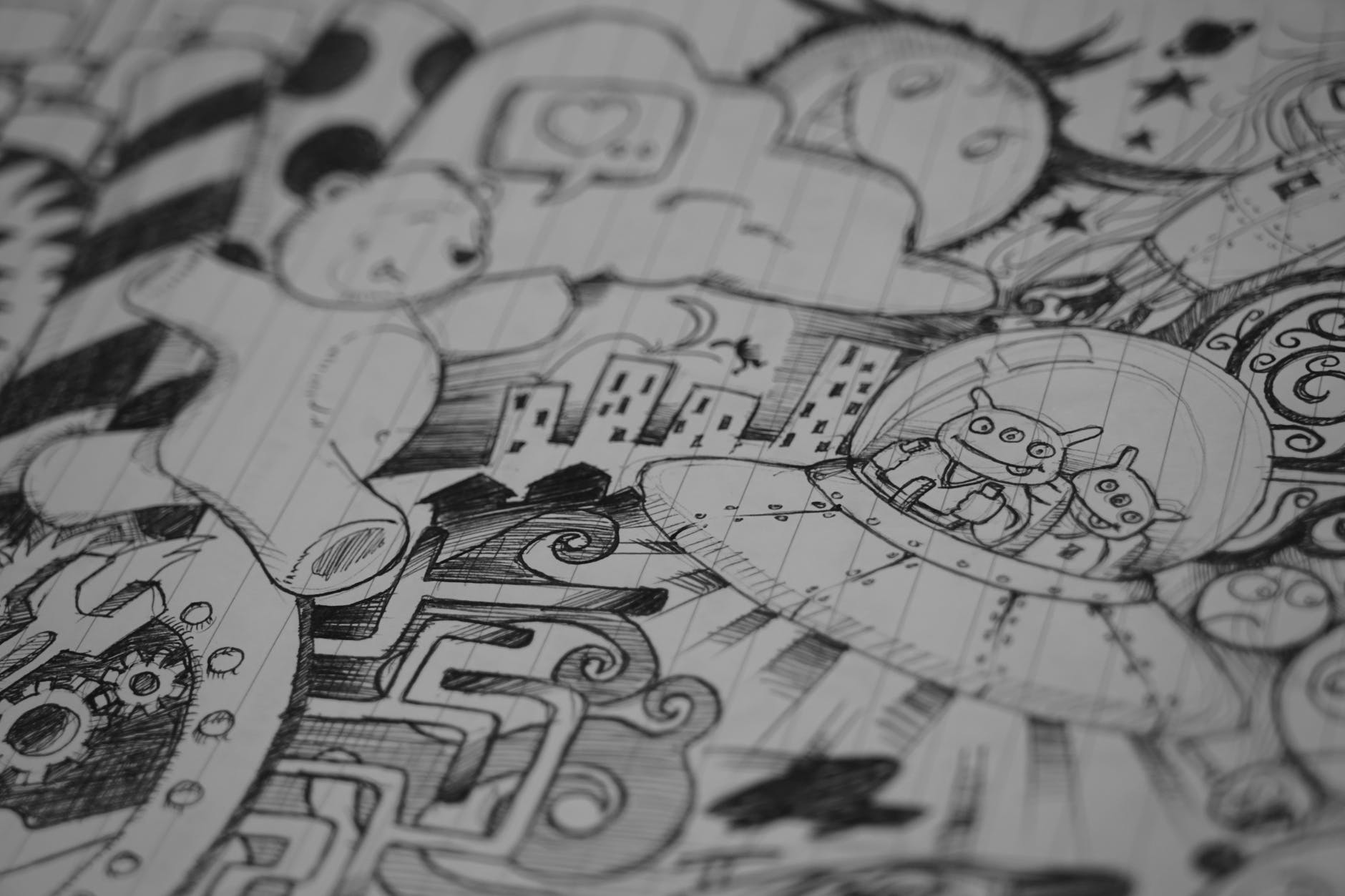
Photo by khairul nizam on Pexels.com

Perhaps comments like these aren’t things you can put into your report cards (space, required format, drop down comments). But parents need to know that you truly see their kids. That you know who they are. That you recognize that they are more than a series of ticked boxes and completed assignments.

I challenge you this week, before Thanksgiving Break, to reach out to as many of your students’ parents as you can and let them know that you really SEE their kids and recognize that gifted is who they are, not what they produce.

“As human beings, our job in life is to help people realize how rare and valuable each one of us really is, that each of us has something that no one else has or ever will have something inside that is unique to all time. It’s our job to encourage each other to discover that uniqueness and to provide ways of developing its expression.” -Mr. Rogers


Talents

I have had the opportunity to speak at CAGT (Colorado Association for Gifted and Talented) for a few years, and was given the chance to do so this year during their first virtual conference. Usually, I spend time networking, talking with other educators, other speakers, and overall being among my tribe who know and understand both me and the kids we all choose to serve. I miss out on things like the art contests, and don’t always pay close enough attention to the performances unless they’re part of a keynote I’m attending.

This year, because CAGT’s conference was virtual, I was able to really look at the work that students from around Colorado had submitted. I’m amazed. Kids from all over our state, from young ones to high school aged kids, took the idea of “A Wider Lens of Gifted” and ran with it, creating amazing pieces of art, music, and performance. Go here to check out some of the work from this year’s conference.

When we are looking at kids for identification, we see those who stand out academically so much easier. Those who are writing multi-chapter stories or reading Harry Potter in Kindergarten, working math problems well above grade level for fun, kids who are passionate about particular topics and know everything to know about whales, and kids who excel on assessments are easy to spot. It’s those kids who have talents beyond academics that we often don’t recognize as gifted.

Look at the kids you have with you over the next couple of weeks. Really see them.

Who plays an instrument?

Who sings in a choir at church?

Who goes to clown school after school?

Who plays club sport and excels?

Who is a scout and demonstrates leadership and service to the community?

Who plays outside and shows their ability to be incredibly bendy and flexible?

Who feels the music in their bones when it plays?

Who simply cannot stop moving when thinking? Who talks and interacts with their whole body?

Who builds and builds and sees things on a completely different spatial level? What “builds” are sitting on your desk, given as gifts, or taken from them because they were creating while you were teaching?

Who doodles? Really LOOK at the doodles…what do you see? A sense of space? line? proportion?

Who is the performer in your group of kids? Who lives for the dramatic?

Photo by Wesley Carvalho on Pexels.com

These are the kids we want to catch. It’s not just cool that they play violin or perform in the church choir… It’s that they have been playing violin by ear since age 3 and can see colors in the music they hear or sing and have perfect pitch. It’s not simply a neat thing that they enjoy drawing or color, but that they’re precise in their drawings and intricate in their detail and able to create a story with their use of color. It’s that child who choreographs as the music plays because their body feels and experiences every note distinctly. It’s that child who sees opportunity in challenge and makes a plan to address it.

Photo by Marlon Schmeiski on Pexels.com

These are the kids you can create bodies of evidence over time for formal identification in dance, performing arts, music, sport, visual arts, and leadership. Having a relationship with the kids you serve matters…you can play to these areas of strength and offer opportunities for them to use their strengths in their learning… Be open to alternative assignments and methods of learning.

Photo by BERK OZDEMIR on Pexels.com

When we truly SEE our gifted kids for who they are and not what they produce, we can create the learning environment that they will thrive in.

Feels

There’s a point at which you simply can’t hold things in anymore. Pandemic fatigue is a real thing, folks, and for many of us in education (and everywhere else), we’re over it.

We’re over the constant not knowing when a quarantine or isolation situation is going to crop up…and who will be impacted.

We’re overwhelmed with worry about our kids and their families when a little says that they don’t feel so good or doesn’t come to school.

We’re done with flexing, pivoting, and being polite when we’re told that this isn’t a big deal and it’s almost run its course or that it’s a hoax.

We’re over stripping down and throwing all our clothes from the day in the washing machine as we walk in the door after work. We’re also tired of choosing what to wear based on what’s easily washed and dried.

We’re over turning around halfway to work when we realized we left our mask sitting next to the coffee mug we walked out without as well.

We’re tired of telling kids they can’t hug each other when one is sad and using pool noodles to illustrate physical 6′ distance when kids just want to be close to one another and hang out or play more than shadow tag.

We’re exhausted from wearing masks, holing up in our classrooms and offices, having Google Meets and Zoom Meetings and turning off our camera so colleagues don’t see us cry or get angry about all. the. things, and muting and unmuting while trying not to talk over others.

And we’re tired of not being able to shake hands, hug, comfort, or just be close to the people we care about…

There’s an exhaustion about all of this, and for our gifted population of kids, parents, colleagues, multiply it by 100, because not only are we feeling our OWN feels, we’re feeling the feels of everyone else around us, listening to the criticism, the layers of problem solving, the sadness over loss and grief over deaths, the fear, and the overall weariness of everyone around us, all while trying to portray strength and leadership for those around us so that there is a familiar feeling…at least for a little while.

And meanwhile, we’re trying to celebrate little things like the early arrival of a friend’s baby, the progress of a friend’s child in reading, an award given by a state level organization for a beautiful painting, throwing parachutes made by kids to protect a coveted snack off the roof, a friend’s dog winning a championship or having a healthy litter of puppies, and finding the last bag of Smarties on the planet before Halloween (wish me luck, I’m stopping on the way home…)

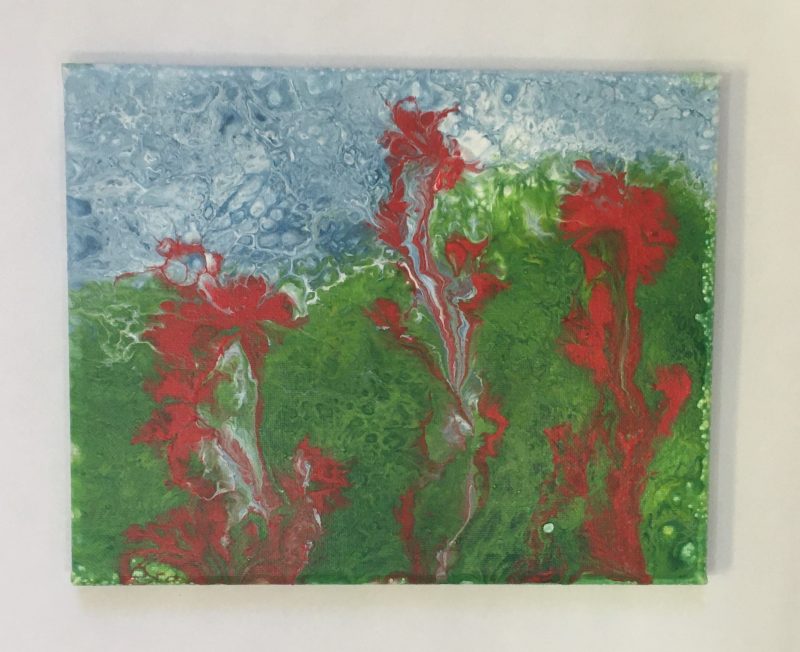
Tall Poppies hangs in my office now. The artist (age 7) won 2nd place
in the CAGT Elementary Art Contest, 2020.

But the feels hit at the most inopportune times. When we’re making dinner, or waiting in the coffee kiosk’s line int he morning. When we’re listening to a book that has nothing at all to do with the present time. When we’re walking the dog in the freezing cold on a snow day. When a friend brings us coffee and even with a mask on, they can tell something isn’t right. And suddenly just looking at one another, the tears flow like a waterfall, and minutes, hours, days, weeks, and months of holding it all in come flooding out with unintelligible words…and the only thing they can do is be there…from six feet away…sending healing energy because holding someone while they cry isn’t allowed.

A friend noted that we may be feeling all this now, but our kids and their kids will continue to experience this for generations to come…

How do we help one another and all of our kids through this?

We listen. We hold space for each other. We can’t solve it. We can’t fix it. But we can let the feelings happen and acknowledge they exist. Brené Brown (who is so very wise) says that that’s the only way to get through this…let the feels happen, acknowledge them…and then let them go because holding on to them isn’t helpful… That’s self-care, too.

Measures of Success

Back in the pre-COVID days when I was in the classroom, I was fairly adept at determining what success looked like in my classroom. Sometimes I used rubrics (writing or projects), sometimes standards correlation tables (usually for math), but most of the time I watched and observed the kids while they were working. It wasn’t about the assignment necessarily, but how they went about getting it done. The process often mattered more than the product.

There were those who flew through, doing everything exactly the way I’d modeled, and they might be able to speak to one or two parts of the work and explain their thinking. And there were those who took very odd routes (that worked a lot of the time) to get what they needed to done or those who used “It’s in my head” and indeed it usually was. And still there were those who got stuck, not knowing what to do next, or lost altogether because the words were different this time, the numbers different, or the work itself wasn’t something they cared too much about or were struggling to connect with. All of these things told me whether or not we were being successful.

(I say “we” intentionally. My kids being successful and growing toward greater understanding meant that I was doing something right. It was incredibly evident when I had done something wrong, both to me and to them, and being the un-filtered sweet things they were, they also had no problem telling me that a particular lesson stunk…and I was ok with that feedback–as long as they could tell me WHY it stunk.)

Because I had the opportunity to see the kids working, asking and answering questions, pushing back on strategies, reminding of format or necessary pieces, teaching in the moment with “Hey kids, let’s stop for a minute…” I was able to know in my gut, even before they finished, whether or not they’d gotten what I’d intended them to get out of the lesson. And when it was evident that they hadn’t, sometimes I’d have them finish regardless because the process of doing the work was important too, and I’d go back and re-strategize ways I could help them understand or do what would show growth toward mastery.

COVID and hybrid/online learning has changed that and now teachers are struggling to determine what success looks like in this alien world we’re living in. Teachers have had to strategize ways to measure progress differently, and they’re moving away from conversation, conferencing, and over-the-shoulder formative assessment, to Google form based quizzes, JamBoards, PearDecks, and photos of completed assignments (that may or may not have been completed by the kids on their own). Teachers can’t observe the process of kid-work from a Google Meet or Zoom Room. It’s just not possible and they are replacing observation with concrete types of evaluation to save their own sanity and lose some of the cognitive load that all of this has caused.

Parents mean well, particularly with their little ones just beginning school, when they offer to help or write for their child for an assignment, but part of a teacher’s measure of progress will always be the child’s own handwriting, coloring, words, and ideas. Part of learning involves the struggle. That’s so difficult for parents and kids to wrap their heads around–particularly the gifted ones who are working with perfectionism… watching kids struggle is so difficult, especially when you know you could make it easier for them.

One doesn’t learn to tie one’s own shoes by watching someone else tie them or switching to velcro or slid-in shoes. We don’t learn to make ramen (because we’re the only one who wants it on soup night) by watching mom or dad do it for us. No one learns to play hockey by watching Miracle on Ice. And we don’t learn to replace bathroom vanities, sinks, and faucets by watching reruns of This Old House on their own. In order to learn how to do it (and when to ask for help or call a professional) we have to actually give it a shot by ourselves.

Photo by Pexen Design on Pexels.com

The most beautiful words a child can utter are “I can do it myself!!” and even if the buttons are all wrong, the outfit is horrific (but would surely inspire some nut at New York Fashion Week), the shoes are on the wrong feet, or the writing is totally illegible to anyone but the child…it’s a win because the child advocated for their right to fail forward and make progress toward being self-sufficient.

The struggle is a valuable piece of learning…and teaching. Some say that writers, artists, and musicians are the most creative people on earth, but I know for a fact that it’s teachers. Teachers right now are doing several things at once: helping the kids in the room learn and observing their work in real time, helping kids online learn and trying to evaluate their work when it shows up in their inbox, and help kids who are trying to learn at odd hours because family work schedules and virtual learning aren’t compatible with no ability to observe or discuss much in the moment. And they’re trying a hundred different ways to do all of those things every day, and sharing what they learn with the other teachers in their world

So our measures of success have to change. It doesn’t mean working harder, longer hours, or putting together multiple sets of slideshows or finding more engaging videos for specific students. It doesn’t mean evaluating all the kids using a google form assessment for which there are definite correct answers. It doesn’t mean working yourself to death providing 47 different learning opportunities in one day and trying to grade them all, agonizing over holding Georgie accountable because they only did 30 of the 47 opportunities you worked so hard to provide.

Measures of success right now might be that you are able to identify the most important thing you want the kids to understand and grow toward mastery of in that lesson. It might be that you notice you have to change something in your presentation format because you forgot to teach how to use it…or really aren’t sure how to use it yourself but it sure sounded good in the moment. Measures of success might include that James is showing up to class and is fully present…that he’s healthy and happy and has something good to share during class. Success is that when you talk with Mary, she can tell you her story and show you with pictures (that may or may not look anything like what she’s telling you) how it goes…when before she didn’t know about beginning, middle, or end. Might be that Ciaran whispers to his mom who is off camera that he can do it himself during class and finally turns in a writing assignment in his six-year-old scrawl written at a diagonal despite lines on the page. Perhaps success is that LeDarius asked for a book about dogs to read for fun, when before he wasn’t willing to read at all, but because you gave him tools like audio books or LearningAlly, he feels comfortable asking for more…he is a reader now.

And sometimes, measuring success is simply a note from a parent acknowledging that they see what a teacher is doing and is thrilled that their child is happy at the end of each day, excited to go to school (whatever that looks like for them), and takes over dinner conversation talking about what they learned that day, or a sincere thank you from a teammate for an idea you mentioned in passing that worked really well for their kids.

Sometimes the measure of success isn’t something you can add to the gradebook that ties directly to a standard, but the little things that keep you going…the tiny bits of progress you get to see every day and the encouragement to try something else tomorrow.

Look for the little things. A flower doesn’t magically appear out of the ground one day…it takes time and noticing the little things like a bump in the earth or something green poking through is what shows growth is happening. The process of growth matters more than checking off boxes. Seeing the process play out ought to be your measure of success.

Photo by PhotoMIX Company on Pexels.com

Trust

A friend asked me to think about what the word “trust” really means. I’m presenting at CAGT on Monday (Please register here! It’ll be fabulous and virtual and you’ll get to see ALL the sessions because you’ll have access for a while after!) and really thought I was mostly done with the presentation itself, but the more I got to thinking about it, the more I realized that the work we do with our gifted kids hinges on trust and I needed to go back and revise my presentation a bit.

I am a huge proponent of teaching self-advocacy to kids, particularly gifted ones, because their whole lives their parents have been the ones to fight the good fight on their behalf. They need more challenge, not more work. They need to be in the higher level Bible class because they already learned everything taught in the one for their age. They want more time on the field to get experience vs. riding the bench every game. They’re not being bossy, but want to be heard and understood by peers and teachers. They may need to approach a project or other work differently, and need to be given space to do that without repercussions.

Every time a teacher says that all the kids have to do the same thing otherwise their work can’t be graded, my heart breaks a little more.

We really need to think about the purpose of the work we’re assigning. I’m sure that none of us assign it to give ourselves something to do at night with a glass of wine or bourbon. We should look at the work we ask kids to do not as an assignment, but as a measure of progress…and progress looks very different from one child to the next. Why does everything have to look the same? And why does it all have to be evaluated exactly the same way?

Amy McInerney got an award every quarter for her perfect penmanship when we were in grade school because she was able to form her letters to look EXACTLY like the ones in the workbook. Mine weren’t any less neat, but they looked a little different than the ones in the book. I made my T different in cursive. My Q looks like a Q and not a swirly 2. My D looks like a D without a combover. But mine didn’t look exactly the same as the book’s, so I never get the award and got a lower grade in penmanship than she did.

Because I make my capital letters a little different doesn’t mean I didn’t make progress…it just looked different. But teachers often feel that if anything looks different than the model or the example, it shows that the child should a) have to do it over b) take a lower grade because it’s not what the teacher was looking for or c) have to “let all the other kids do whatever THEY want too.”

The cry for conformity is loud…and frankly, I’m tired of hearing it. Now is an excellent time for change…since we’re revisiting what school can look like anyway.

When I talk to kids about self-advocacy, the first thing I ask them is how they feel about the adult or peer they need to talk with about something. Some are afraid, because their parents always took care of it and here I was asking that they do it themselves. They are afraid of the teacher or person saying “No” and then being humiliated. Some are excited, because they have a lot to say and would love the chance to do something the way they envision it for once. It does come down to trust though. Do they feel they can trust that other person to listen to them first of all, and do they trust them to at least consider what they’re requesting?

I had a student once who was brilliant and could talk about anything we were learning. The kid loved to be the center of attention and was incredibly creative and dramatic. The thought of hand writing an essay, or even typing one, created anxiety and the child shut down altogether. Some teachers would see this as refusal to work and give consequences like “You can’t go to recess until this is complete” or “You will have to do it for homework.”

I sat with this student one day and said, “Tell me more about how you would show what you know about the work we have done together if I hadn’t assigned an essay.” The things the child came up with! So creative and unique (and so much more fun than writing an essay)! Finally, we settled on a newscast, which would have to have a written script (which wouldn’t be graded for neatness, spelling, or anything other than content) and be recorded using a program we had on the computer. We created a rubric and specific “must-haves” for the work. And it was brilliant.

We created trust that day. And from then on, I began giving kids the option to do things I came up with or determine what would best suit their way of showing what they knew. We worked together to talk about what the most important things we needed to evaluate to show progress. Those things were the same regardless of the end result. Doing this gave them the opportunity to problem solve, back pedal, collaborate, or fail forward and reflect on the successes and what didn’t go as well as they thought. They always knew that sometimes I’d need them to do something specific because I needed something in particular and I’d be honest with them about what I needed and why (like an actual essay to measure their progress in writing an essay), but having that freedom most of the time helped them grow in their confidence and self-advocacy skills.

I think what hurt the most were the times where they were confident that other teachers would do the same as I had, only to be shot down with no discussion or support for their learning self-advocacy. More than once I watched confident and creative kids come back to my room after asking for what they needed saying that another teacher had never even let them explain their idea. I hurt for them. And I hurt for the teacher, too

Think about what that did to the student. Think about what that did to their relationship with that teacher. Think about what opportunities were missed.

Our work with these tall poppies is so incredibly rewarding, adding this layer of trust makes it that much better.

“What is a Weekend?”

My favorite line in all of Downton Abbey is from the first season, the first or second episode. The Crawleys are sitting around their dining table, and Cousin Matthew notes that he could take care of something “on the weekend” to which the Dowager Countess queries, “What is a weekend?”

Sometimes it feels as though we haven’t gotten a weekend, a summer, a break for a very long time, or have any time that isn’t spent doing work, thinking about work, thinking about planning for work, and we spend lots of time feeling guilty for doing anything that isn’t work, and hoping like crazy that no one finds out we aren’t working when we aren’t at work. And I am fairly certain that while these feelings are particularly common among educators now more than ever, there are a few other professions where they exist as well.

Teachers are overwhelmed…and that’s really an inaccurate statement. There isn’t a word that expresses what teachers are experiencing. During the course of the day, they are fielding questions from children in front of them, online, via chat, via email, and queries from well-intentioned parents on behalf of their children either via chat, phone call to the office asking to talk to the teacher while they are teaching to get clarification, or via email with a follow up several additional times because their first one clearly wasn’t seen in the moment but still requires an answer.

Between classes and after school, teachers are posting videos for kids who won’t see them until later that night or on the weekend when they can get access, calling parents back, emailing parents about young ones typing “poop” in the chat for 90 minutes because their parents were on their own meeting in the other room, dealing with their own adult versions of typing “poop” in the chat for 90 minutes… They’re brainstorming with colleagues about how to modify a lesson to be able to be done with kids in the room, kids at home on their own, kids at home with parents to help, and kids who won’t see it until late at night.

I wondered while I was working on my weekly preview on Saturday whether the posts I share on social media upset the teachers in my world, seeming rude and disconnected. I post about walks to the park, Zoom wine class on Sunday, naps while the laundry washes itself, and quick stops for beer on the way home because it’s there and someone else brings it to me. When I looked through my planner, I realized that those are tiny moments of “weekend” I’ve captured… My work right now is very slinky-like, ebbing and flowing with short spurts of work time in between coverage for this, that, or the other thing, with a few longer sessions where deep work can happen… I got better about setting boundaries and still try to leave on time, but there are meetings after 5pm to attend, work for other projects to be done, follow up that can’t happen during business hours because they’re working too, and calls from my mother at 3am, afraid and feeling dizzy, when I have to be up in 2 hours to be at school well before a 7am meeting during which I listen to understand…not respond.

Cousin Violet, a part of me wishes that I could live your simple life. But I don’t know that I would be happy doing it. I might for a while, only having to worry about local gossip and social convention sounds quite relaxing, to be honest. I don’t know how long I could last though…

You said it best, “You’re a woman with a brain and reasonable ability. Stop whining and find something to do.” And so I shall…and take pleasure in the small moments of my weekends.

Wise Words

Many days lately…since March, really, I have ended my day frustrated, overwhelmed, feeling useless or unsure whether or not I’m doing anything “right.” I have the opportunity to meet with a smallish group of gifted educators every few weeks and I leave every Zoom meeting feeling alive and so much better about everything after I leave them.

Last week, wise words were shared and the next day I went to work and wrote them on a sticky note and stuck it to my nameplate next to my door.

Because I have chosen to work in the field of giftedness, in collaboration with a bunch of gifted people, serving a bunch of gifted kids, these wise words are so incredibly important to remember, especially now.

We had dreams when our building remodel began. Finally, we’d have wide hallways for kids, beautiful spaces with high ceilings and storage, rooms used for a variety of purposes with furniture that could be moved and reorganized and modified as teachers and students needed. Beautiful colored walls, lots of natural light, places for kid-created art showcases, and outdoor spaces classes could use for learning on the many Colorado days that allow it. Spaces for kids to refocus, take sensory breaks, meet with teachers one on one, and for teachers to take a time out of their own when they need it, to work uninterrupted on curriculum development and unit planning. Community spaces for collaboration and discussion, resource storage, a gym and theater space that served multiple purposes from middle school sports to large audience performances.

And here we are, on the edge of October, with so much left unfinished, dedicated construction and finish workers taking care of details everywhere, trying not to interrupt meetings or classes, working around all of us who are trying to get on with the work of school. Other staff are helping get rid of or store things we can’t use right now or won’t use anymore, while still setting up the critical pieces for learning: blinds so kids can seeFamilies are deciding whether to come back at all and just homeschool or unschool, stay virtual, go hybrid, or choose elsewhere that’s in person all the time because parents have jobs and bosses who can’t or won’t grant any more grace because they have kids. Classrooms don’t look like they should with all the collaborative furniture separated to ensure 3′ or more distancing between work spaces and community supplies packed up. The question “Will the kids be allowed to borrow books from our classroom library?” hurt my heart…it shouldn’t ever be a question anyone ever has to even ask. Teachers are trying to figure out how to manage keeping kids in seats without duct tape (seems there’s a rule about that somewhere…) while simultaneously providing engaging performance theater for those attending from home and also fielding parent emails and questions about what class looks while trying to teach said class because they feel like they aren’t doing it right..perfectionism is a thing for them too. And all of those lovely community spaces…closed until further notice because people can’t be that close to one another…

The sheer number of new multi-page documents that require review, publishing, and revising is tremendous. And each one hurts a little more.

Fragility for all of us is real right now. On so many levels.

We hoped for perfect. We kind of expected it because we had worked so hard to make this happen. Perfect happens when you work hard, right? We knew there’d be snags, glitches, criticism because there are so many opinions about what all of this ought to look like and, questions because not only do things change with every exhale, but they change upon the inhale again as soon as you tell people about the new information…there’s more, or different, information.

In all of this imperfection though, Brené Brown says there are gifts.

The realization that you meant something to a child because they keep asking about you.

The understanding that process is much more meaningful and demonstrates deeper learning than product sometimes.

The willingness of people to reach out to each other, to help, to support, to “pop in” virtually so someone can take a bio break, to talk with families to try to come to solutions, to meet on the lawn to troubleshoot tech issues, to meet at night after parents are home from work to to help their child.

The new ideas that spring from all of this imperfection…

How will you see the good shine through?

Drawing by Ciera Gonzales, 2007

Anna Wintour’s Sunglasses

I’m fairly sure I know why Anna Wintour wears sunglasses all the time. Articles about her say it has to do with lighting during interviews, or eye sensitivity, or just her wish to remain secretive and mysterious and not have people know what she’s thinking. I am pretty sure I know the truth though.

School began for me about three weeks ago. Planning for the beginning of school began in March, when we closed rather unexpectedly due to COVID-19. There was no Spring break, no Summer break, and while yes, there were afternoon naps, it was a constant “on call” and wondering when the next shoe would drop–would it be a construction boot? A loafer? Or a black stiletto with a red sole? Not just for me, but for several of us, fielding zoom meetings, budget brainstorming, WebEx meetings, district meetings, watching press briefings, fielding emails, and loads of other things we wouldn’t normally be handling during the “summer” no matter what else was going on in the world.

I blogged about our Season of Sacrifice last week…or was it earlier this one? I don’t even know now. I wrote about granting grace to one another. I wrote about kindness and understanding. I wrote about frustration and sadness and overwhelm. I wrote about taking Attitude Adjustment Walks (AAWs). None of that has changed. It’s still our season of sacrifice…this one will be longer. A lot longer. And for those of us who feel all the feels, for everyone all the time, it’ll be even harder.

I take my dog to the park almost every morning and evening. Last night, I waited too long and who knew? It gets pretty dark around 7:30 now. This morning’s walk was really quite nice–still fairly dark, but calm. Tonight’s walk, while earlier and still light out, was…frantic. Between answering phone calls, responding to texts and messages, dodging kids playing baseball and soccer, kids playing unsupervised and running at all the dogs (mine included) while their parents were checking Facebook, children walking dogs bigger than they are and weren’t able to control, and a kid on a bike riding at Mach 12 trying to mow me and the dog down while grinning like Scut Farkus as he blew past a second time laughing, I finally just stopped, sat down in the grass with my dog, and cried.

I cried because of all the questions I have no answers for. I cried because I don’t have the ability to make anyone’s life easier. I cried because I can’t fix any of the things. I cried because some parents are afraid, some parents are pissed, and others think we’re just twiddling our thumbs by not being fully in person right now. I cried because I don’t want to be on the news…for anything. I don’t want a reporter saying that someone didn’t use the right procedure, cleaner, disinfectant, mop, or whatever and someone else got sick. I don’t want to have to call a class-worth of families to tell them to quarantine because someone may have COVID. I don’t want to have to quarantine myself because I screwed up and comforted an overwhelmed child. I don’t want to lose friends to aftereffects of COVID. I don’t want anyone to resign, quit, or say we didn’t do the proverbial “enough” to keep people safe or make their work simpler. I cried because I sat through an hour long meeting about procedures and policies about safety and felt horrible for the host having to answer questions that there is no definitive answer for. I cried because kids are struggling and teachers are frustrated and both sides are shutting down. And I cried because the list of all the things I love to do in my work, I can’t do…either because I can’t afford to pay for the damn conference to speak at it even virtually or because I can’t be with kids to notice what cool things they’re doing and see if my gut instinct is right or because there’s already too much on the plate of teachers for anything else resembling professional development. I cried because I’m tired…and I know everyone else is too…and we’re all worried that we aren’t cut out for any of this.

Anna Wintour, Editor-in-Chief, Vogue Magazine

And that is why Anna Wintour wears sunglasses. She wears them to hide the tears, the runny mascara (waterproof mascara is a myth, for the record…), and bloodshot eyes caused by carrying all the things in her heart. Keeping it all from the prying public, press, and young boys in green shirts at the park asking if there is anything he can do to help as tears fall behind the dark lenses.

Odd Beginnings

I was on the phone with a friend the other night, lamenting 2020 as a whole, but specifically things school-related. When we ended mid-March, I couldn’t wrap my head around what would surely be the oddest beginning to a school year in the history of ever–starting school virtually when we are not a traditionally virtual school.

One of the parts I have always loved about the beginning of the year, aside from the smell of freshly sharpened Ticonderoga pencils and brand new boxes of Crayola crayons, has always been making connections with families and kids. Seeing the excitement in the eyes of the kids as they walk into what would be their new classroom, seeing old friends in the hallway and new ones coming to the door. Chatting with kids-who-were-mine during quick breaks between conferences, and hugging siblings of graduates and kids returning to us from elsewhere were the highlights of those first days. My Facebook feed the last few days as been all about how much I love family conference days and how much I’d missed our kids and their families.

Connection is such a big component of the relationships we create with our gifted kids, their families, and one another in our building. For a gifted child and their family to see that there’s someone who will advocate for them, who understands them, and who will truly SEE them for who they are matters so much, and I have worried endlessly since mid-March about how we could make that happen for this batch of kids, those who are new to us especially, but also those we have known a long time and who we know have struggled since we had to leave each other so suddenly.

When I think about friends who teach virtually, they have such a small snippet of time to make a connection with a child that it has to be incredibly intentional–there’s no time for stories, explanations, or those conversations that take everyone down the rabbit hole and into Wonderland. Right now though, kids will need that–many may not have visited many rabbit holes or Wonderlands lately. They will need time to really show teachers about who they are, tell about what they’ve been doing and enjoying and hating about the time since March. They’ll need time to share about what they want to learn, who they need in their world, and who we will need to be for them. Parents will always have goals for their kids and all have an idea of what they think virtual or online school ought to look like, but the piece that we need them to not forget is that their kids need to feel connected to their teachers, school staff, and all the kids in the “meet” with them. Building relationships is hard enough in person for some (kids AND adults) but virtual is even more challenging.

Before anything else, as we begin this very odd school year, we need to think about how to create those connections with intention, giving kids and their families the space and time to build relationships that eventually will move from the screen to in person, where hopefully we’ll be able to hug and fist-bump and high-five and laugh together and HEAR the laughter of one another instead of just seeing “Lol” in a chat or silent laughter behind a muted screen.

Off Leash

I went hiking with a friend today and we brought the puppies (all the same age) and their granddad. Granddad worked hard keeping track of the puppies, making sure they didn’t go too far ahead, run too deep into the brush, and that they came back when we called, modeling what behavior they ought to be exhibiting out there in the world. My little red girl hadn’t ever been off leash before, except in the dog park, so this was a huge thing for her to be trusted to stay nearby and not run off into the wilderness. I was a little apprehensive about taking her leash off, but figured I had to trust her sometime.

As we hiked, she kept looking back to make sure I was still there, that I hadn’t walked off with out her, and she stayed with the others, romping in the tall grasses, running ahead and back to us, exploring the scrub oak for sweet grass, and investigating horse poop and other scat. She came when called, and was polite when we met other people on the trail.

There was something about watching the dogs run and play today that made me tear up a little. Those few hours of freedom, still under the watchful eye of both of us and their granddad, who would probably be quicker with the redirection than either of us, build up the bond of trust between us.

I remembered that feeling from the classroom. The first time I planned a unit and the kids had ideas of their own and I made them a deal–you go ahead and we’ll see how it goes; if it goes south, we’ll try my way. And it went great–they ran with their ideas, asked for help when they got stuck, and reflected intentionally on what went well, what needed improvement, and what they wanted to try next time. I gradually let go as the years went on, and we created projects together, a few playing devil’s advocate for their peers or noting that so-and-so had done X and the results were less than stellar but Y worked well. There was collaboration and discussion and the kids grew, learning by doing, with not everything dictated by me. I had non-negotiables, of course, but most of the work they did was self-directed, peer-reviewed, and intentionally reflected upon. It was in those moments that I enjoyed teaching the most.

Like my little red dog today, the kids and I grew in our trust of one another over time.

Right now, teachers are scared about the upcoming year. For their health, their coworkers health, for the health of their kids, their families, and their OWN families. They want explicit direction about what’s coming next and how this year will look, but at the same time they are afraid of losing those learning-by-doing moments with their kids because nothing is going to look normal–losing those moments that build trust in a community of learners. They are afraid of expectations of others outside telling them that things must look like this or that–especially when those others aren’t educators…everyone has their idea of what school should look like, don’t they? They don’t want to lose the freedom to be the artists using science to do this work…

I talked to a friend tonight and we agreed that “Things” should be my job description for simplicity. My role encompasses lots of things: projects, work, interactions, support, and everyone believes it should encompass the things they feel are most important or that it should look a certain way. The beauty of this role though, is that it evolves and changes all the time, with responsibilities being added, changed, updated, and delegated to others as they’re ready to grow into them. I was afraid the first year–I’d been let off leash and wasn’t sure where my support was–who do I ask for permission? for what do I have to ask permission and what can I just do? As I watched my little red dog today, it was nice to see her grow a little in her own confidence–she does know the right things to do, who to trust, who to follow. I remember when my director told me I didn’t have to ask permission for everything…checking in was fine for almost everything. She trusted me.

I hope that administrators can remember that this year can be a true year of innovation if we trust our teachers off leash for a while to do that work, using their expertise, their creativity and artistry, and their love of our kids to help them grow this year, in the face of whatever may happen, checking in as needed for direction and to make sure we’re still there and haven’t run off into the wilderness.

From left: Keeva, Cap, Trip, Delaney (front)